Gambling
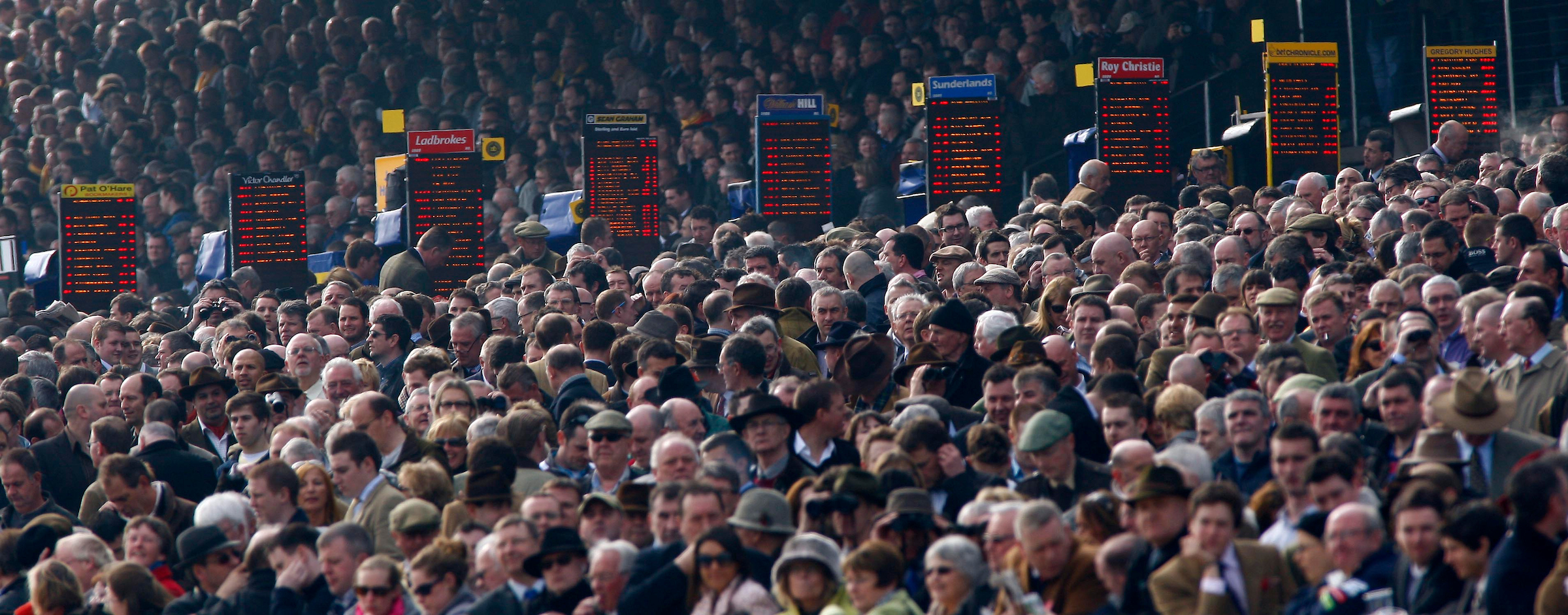
British racing has a unique historic and symbiotic relationship with betting worth £350m annually to the sport through key revenue streams like media rights payments and the Horserace Betting Levy. It is financially reliant on a healthy legal betting market and vulnerable to regulatory changes that impact betting operators.
Financial Risk Assessments
More commonly referred to as ‘affordability checks’, Financial Risk Assessments (FRAs), were officially adopted as Government policy when they were included in the Conservative Government’s 2023 Gambling White Paper.
They are designed to assess whether a customer’s online gambling spend is financially sustainable, with the aim of reducing gambling-related harm and providing a consistent approach across all operators. The White Paper set out that these should be set at net loss thresholds of £1,000 in 24 hours and £2,000 in 90 days. It is estimated that the checks at those thresholds would result in the Treasury losing £300m a year in lost tax revenue as people move further to the illegal market.
The impact on horseracing would be particularly damaging, with independent modelling from Regulus Partner suggesting that British racing could lose up to £250 million in five years.
In 2024, Stuart Andrew MP instructed the GC to conduct a pilot of these checks to ensure that the technology used by Credit Reference Agencies (CRAs) worked before formal introduction.
The pilot began in the summer of 2024 and concluded in May 2025. While the percentage of frictionless assessments achieved in stages 1 and 2 were above the 80% requirement set out in the White Paper, there have been well-documented issues with CRAs providing inconsistent results for individual customer profiles to betting operators.
In July 2026, after a lengthy post-pilot analysis period, the Gambling Commission announced that there will be a phased introduction of affordability checks over the course of an implementation period of unspecified duration.
British racing was disappointed by this decision, as FRAs will have severe financial implications for the sport, the UK economy and subject racing bettors to unwarranted levels of intrusion.
Perhaps most concerningly, the policy was signed off without key stakeholders in racing and betting being able to see vital evidence such as the full pilot report and NatCen’s independent review of the pilot.
A policy decision of this magnitude also needed to receive parliamentary scrutiny, especially when other policies from the 2023 Gambling White Paper were passed via legislative routes.
We are now working with the DCMS, the Gambling Commission and the betting industry to find ways to mitigate the worst impacts of this policy on the racing industry.
Machine Games Duty
At the Budget in October 2026, the Chancellor announced that the rate of Machine Games Duty (MGD) will increase from 20% to 25% in April 2027.
While the Government rejected a worst-case scenario to increase MGD to 40%, in raising the rate to 25% it will nevertheless cause significant damage to racing’s finances.
There is now a clear risk that this decision will lead to the closure of hundreds, if not thousands, of betting shops across the country.
British racing – which derives nearly a third of its £350 million annual income from betting via high street shops – is now set to potentially lose £57m a year, based on the independent modelling that was shared with the Treasury ahead of today’s Budget.
While the MGD rate increase is not as severe as some called for, this change could still prove devastating for the future of racing – impacting prize money, the viability of racecourses, thousands of jobs; and vital horse welfare projects and research.
Betting shop closures will also significantly impact a large part of the sport’s fanbase for whom a visit to their local bookie is the primary way they engage with horseracing.
As the only sport in receipt of a statutory levy from the betting industry, we are seeking urgent engagement with the Government to establish how we can work together to reduce the impacts of this tax policy.
Threat of the black market
There is considerable evidence that black market betting has grown substantially in recent years. Industry analysts Yield Sec suggest that the black market has grown from just 0.43% of the market in 2020 to around 9% in the first half of 2025.
In a November 2026 study that analysed the website traffic of over 300 popular betting websites used in Britain – comprising 74 legal and 227 illegal betting websites – the International Federation of Horseracing Authorities (IFHA) found that monthly unique visits to illegal and unlicensed betting websites increased from 1.8 million in 2022 to more than 25 million in 2025.
The study also found that over the first seven months of 2026, there were 19.4 visits to illegal sites for every 100 visits to legal operators, a rate of around 1 in 5.
Customers are also spending longer on illegal and unlicenced sites. Between October 2024 and July 2026, average visit duration rose by 32%, from 5 minutes 38 seconds to 7 minutes 25 seconds. Pages viewed per visit increased by 34%, from 5.19 to 6.98.
This migration to the illegal market, which comes despite increased enforcement by the Gambling Commission in recent years, has already reduced online betting turnover on British racing by over £2bn, and this will only worsen with the implementation of financial risk assessments.
Illegal betting companies do not respect the UK’s gambling regulatory framework, offer no consumer protections, pay no tax and do not contribute to the Horserace Betting Levy.
The integrity risks of black market betting cannot be overstated: it is vital that as many customers as possible remain in the legal market so that racing can remain as free as possible from betting-related corruption. Bets placed in this market are virtually impossible for the BHA to track.
The Government has acknowledged this risk, with the Treasury allocating £26 million to the Gambling Commission to combat the black market, while a new Illegal Gambling taskforce has also been created by DCMS.
Sponsorship and advertising
British racing is financially dependent on a strong legal betting market and vulnerable to regulatory changes that impact betting operators, including advertising restrictions. A long standing, mutually dependent relationship exists between racing and betting worth approximately £350m annually to the sport including some of our key revenue streams like media rights payments and the Horserace Betting Levy.
Around £20m is spent annually on direct racing sponsorship and £165m on marketing. Although only a small fraction of the latter figure is returned to the sport, it helps operators attract racing betting customers in a highly competitive regulated market, which in turn boosts funding streams like the Levy.
Due to our unique link to betting, racing is exempt from the 2019 “Whistle to Whistle” Betting and Gaming Council advertising code, but racing was the first sport to introduce its voluntary gambling sponsorship code in 2024 as requested by the 2023 Gambling White Paper. Racing’s code only permits sponsorship from Gambling Commission-licensed operators.
We firmly believe that it is wholly appropriate – provided that responsible gambling messaging is included and that adverts are not aimed at children – for opportunities to bet responsibly on British racing to be advertised both online and during broadcasts of the sport based on its historic and intrinsic links with betting.
We would have clear concerns about any move to severely restrict gambling advertising in Britain given the current trajectory around the growth of British bettors betting with unlicensed operators. Any move to restrict the legal market’s ability to advertise will only empower black market operators, who do not respect the regulations that underpin the UK market when it comes to customer acquisition.
This is a clear danger, as advertising industry analysts WARC forecast that the advertising spend by licensed operators is expected to fall by 9.2% this year to £1.1bn, while spend by unregulated operators is projected to grow by 32%. This puts illegal firms on course to account for the majority of gambling advertising spend by 2028.
Horserace Betting Levy
The Horserace Betting Levy (the Levy) is a statutory charge paid by bookmakers on their gross profits from British horseracing – the rate is currently set at 10%. The Levy is administered by the Horserace Betting Levy Board (HBLB) on behalf of DCMS.
HBLB’s statutory objectives are to collect the Levy from bookmakers and to apply the funds raised to one or more of the following:
• the improvement of breeds of horses;
• the advancement or encouragement of veterinary science or veterinary education;
• the improvement of horseracing.
Around 90% of Levy income is applied to the improvement of horseracing each year, with funding mainly used for prize money – which is the primary means by which income revenues flow through the sport – and research in equine welfare.
Thoroughbred Movement
Horseracing is a global industry, and last year, Thoroughbred racehorses made over 20,000 international trips to or from Great Britain. However, movements to and from the EU since 2019 have fallen by a quarter. This has created a disadvantageous environment and trading deficit for the British racing sector, while competing jurisdictions in Europe are seeing positive improvements in bloodstock movements.
It is therefore imperative that the recently announced SPS agreement with the EU address the barriers to trade which are impacting on the ability of British racing and breeding to remain competitive on the world stage and protect the enormous contribution that the sport makes to Britain. We await more details, but we look forward to working with Defra to ensure that the agreement reduces friction in the movement of horses across borders, deliver cost savings, safeguard biosecurity and improve the trading environment for the sector.
Thoroughbred travel across Europe is underpinned by high standards of health and welfare. As such, there are limited biosecurity risks of allowing foreign-bred horses into the UK without border checks. These high standards were previously recognised, for some 50 years, under the Tripartite Agreement where documentary checks were not required for movements between the UK and the EU both pre and post the UK’s entry into the common market. This worked because genuine, high-health movements were recognised and facilitated with minimal friction. The new SPS agreement must also do this if British and European racing and breeding is to continue to thrive.
A mechanism developed with or alongside the EU to identify and pre-approve horses meeting strict health criteria would also benefit horses themselves by reducing time-consuming checks and delays.
It also remains our ambition to maintain and grow Thoroughbred trade using digital ID to facilitate high-health movements of horses. The Thoroughbred industry already has digital ID, which – if appropriately integrated with UK Government systems – could facilitate this. We continue to urge the Government to press ahead with long-promised mandatory digital equine ID.
Digital solutions to enable real-time traceability would also improve the UK’s disease responsiveness and help address the very real concerns raised by the National Audit Office and the Public Accounts Committee inquiries.
Equine Welfare
British racing leads the way in setting the best horse welfare standards in the world. Since 2000, British Racing has invested £63m in veterinary research which has helped cut the number of fatal injuries on the racecourse by a third, to just 0.2% of all runners.
Equine Welfare
British racing leads the way in setting the best horse welfare standards in the world. Since 2000, British Racing has invested £63m in veterinary research which has helped cut the number of fatal injuries on the racecourse by a third, to just 0.2% of all runners.
Our welfare strategy is overseen by the independently chaired, cross-industry Horse Welfare Board, and we constantly strive to improve safety for both our equine and human participants.
The Horse Welfare Board’s 2020 strategy, “A Life Well Lived”, which is due to be refreshed this year, committed to lifetime responsibility for the thoroughbred and identified 26 specific projects for the sport to action.
Recent improvements that stem from the strategy include enhanced ground management to reduce injury risk; the introduction of the 30-day foal notification; the roll-out of pre-race veterinary checks, and changes of obstacle design from orange to white following groundbreaking equine vision research.
Science and data drives everything racing does with regards to animal welfare, and the sport is willing to invest to ensure the best and most up-to-date evidence is driving decision-making.
British racing takes a transparent approach to discussing equine welfare standards in the sport, and the HorsePWR website highlights the care racehorses receive throughout their careers and looks to address head on the areas of concern that the public may have.

Discover the PWR of racing
HorsePWR is British racing’s hub dedicated to the Thoroughbred racehorse, the ultimate equine athlete.
The site is designed to open the doors to the sport and talk about the Thoroughbred – their purpose, the lives they lead, and the high welfare and safety standards that underpin British racing.
We want to provide facts, educate, and confront the tough questions head on. The facts matter. Why? Because we understand our responsibility for our horses.
Purpose. Welfare. Responsibility. That’s HorsePWR.
Horse PWR is produced by the British Horseracing Authority (BHA), Great British Racing (GBR) and racing’s Horse Welfare Board (HWB). The platform is supported by the Horserace Betting Levy Board (HBLB).